The Future of Retail Media Belongs to the Many, Not the Few

Swiftly
For years, retail media has been the domain of a powerful few. Amazon, Walmart, and Kroger proved that when retailers combine first-party shopper data with advertising technology, it creates a high-margin, measurable revenue stream. These early leaders showed that brands will pay a premium to reach verified shoppers in retail environments — but they also set an expectation that only the biggest retailers could play.
That era is ending. The next phase of retail media will belong to the many, not the few. Regional and independent grocers now have access to the same digital capabilities once reserved for the largest national chains — and together, they represent an untapped force capable of transforming the entire retail media landscape.
With the right technology, grocers of all sizes can unify their audiences, attract supplier funding, and deliver measurable value to both brands and shoppers. This shift isn’t theoretical — it’s already happening. And Swiftly is helping make it real.
What Is Retail Media — and Why Does It Matter?
At its core, retail media is advertising that happens within a retailer’s ecosystem — whether that’s an app, website, or in-store display — using the retailer’s first-party shopper data to target and measure performance.
When a shopper sees a digital ad for a product while browsing a retailer’s app, and then buys that product in-store, that entire journey can be tracked and tied back to the campaign. That means brands know exactly what worked, retailers earn incremental revenue, and shoppers get more relevant offers.
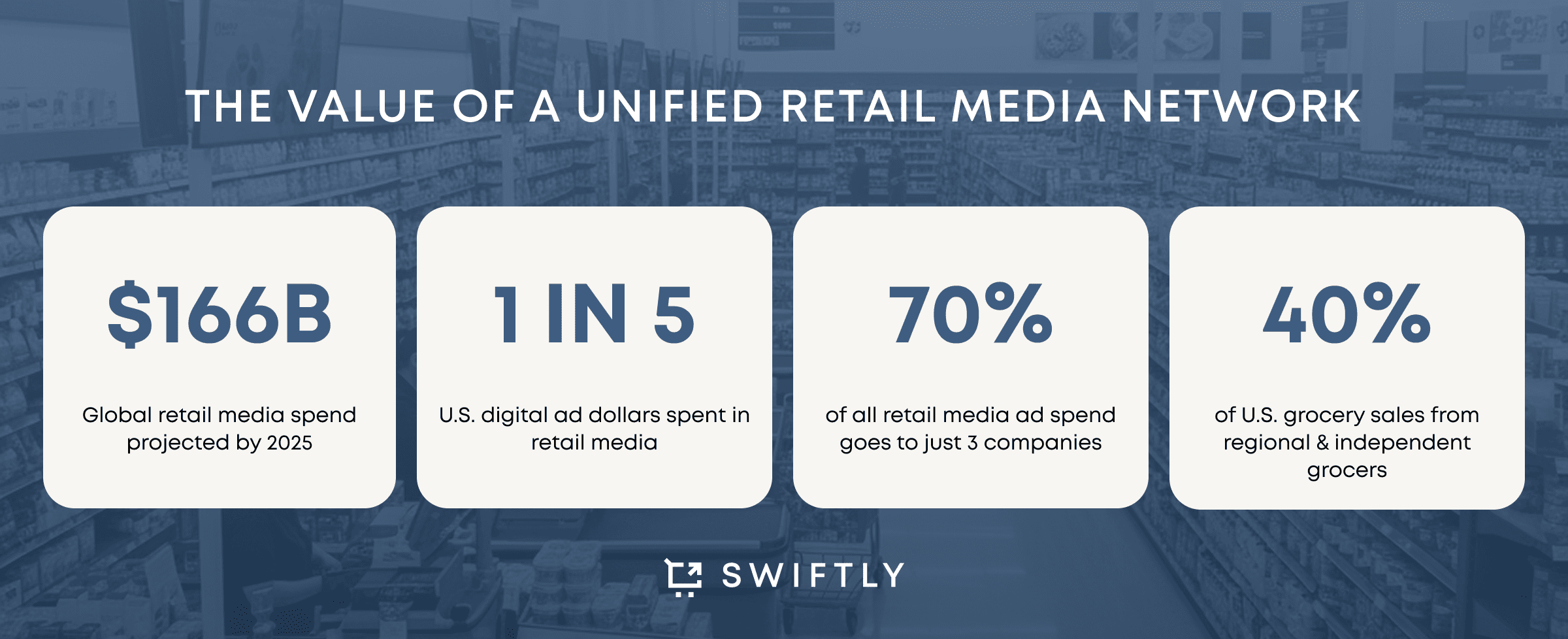
This model has quickly become one of the fastest-growing channels in marketing. According to GroupM, retail media is projected to surpass $166 billion globally by 2025, and in the U.S., it now accounts for nearly one in every five digital ad dollars spent.
But most of that money currently flows to a few players. Insider Intelligence (2024) reports that 70% of all retail media ad spend goes to just three companies: Amazon, Walmart, and Kroger.
That’s not because smaller grocers lack loyal customers — it’s because they’ve lacked the infrastructure and scale to compete.
Why Regional and Independent Grocers Are the Sleeping Giants of Retail Media
While a handful of large retailers dominate ad budgets, regional and independent grocers collectively represent over 40% of U.S. grocery sales (FMI, 2024). These stores serve millions of high-frequency, high-intent shoppers every day — the very shoppers that CPG brands most want to reach.
Yet historically, these retailers haven’t been able to fully participate in retail media for a few key reasons:
- Technology barriers: Building or licensing a retail media network requires advanced digital tools — apps, loyalty systems, personalization engines, and closed-loop reporting — which are costly and complex to manage individually.
- Fragmented data: Each retailer uses different systems for loyalty, POS, and digital ads, making it difficult for brands to measure performance consistently across chains.
- Limited supplier investment: Without standardized reporting or scale, regional retailers struggle to attract large CPG budgets that flow automatically to the biggest networks.
As a result, retail media — which should be an equalizer — has instead reinforced industry inequality. Until now.
The Turning Point: Scale Through Unity
The next era of retail media growth won’t come from more consolidation. It will come from connection.
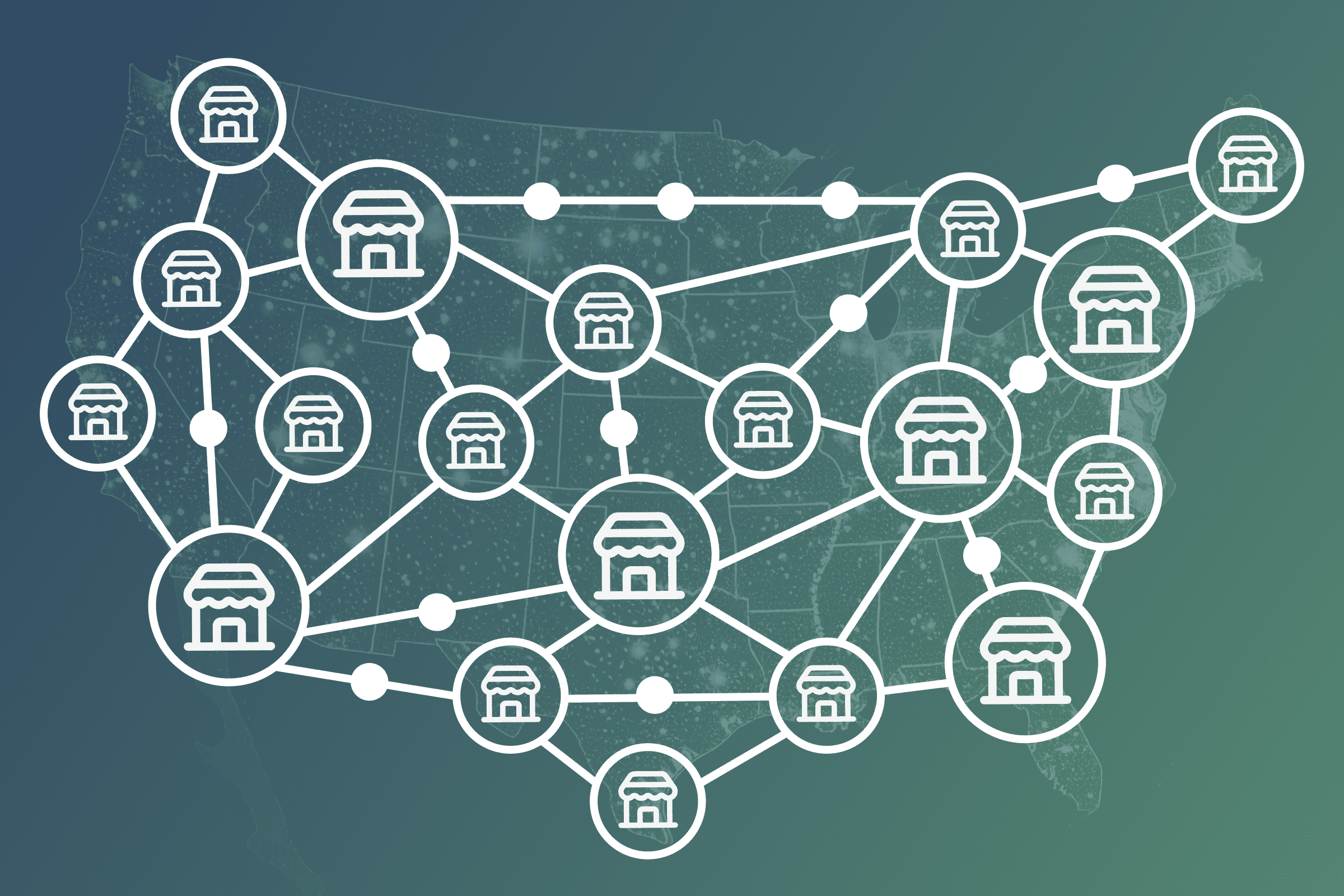
Rather than each retailer running its own isolated platform, the future lies in connected networks — platforms that link independent retailers together under a unified framework, creating national reach without sacrificing local control.
Here’s how it works:
- Shared infrastructure: Participating retailers use the same technology platform for digital engagement, retail media, and measurement — creating consistency across the network.
- Aggregated audiences: Brands can activate campaigns that reach verified shoppers across multiple retailers in one buy, while still targeting locally.
- Unified measurement: Campaigns are tracked through a shared standard (such as incremental Return on Ad Spend, or iROAS™), so brands can measure performance at both national and store levels.
- Retailer independence: Each retailer retains full ownership of their shopper data, brand identity, and customer experience.
This model unlocks the full potential of the grocery industry by transforming fragmentation into collective scale. It gives CPGs the reach they want and grocers the technology they need — without forcing anyone to give up what makes them unique.
Why Connection Wins: The Value of a Unified Retail Media Network
A connected network model creates measurable benefits for everyone in the ecosystem:
For Retailers
- New revenue streams: Retail media and supplier-funded promotions bring in high-margin income that can offset operating costs and fund better shopper value.
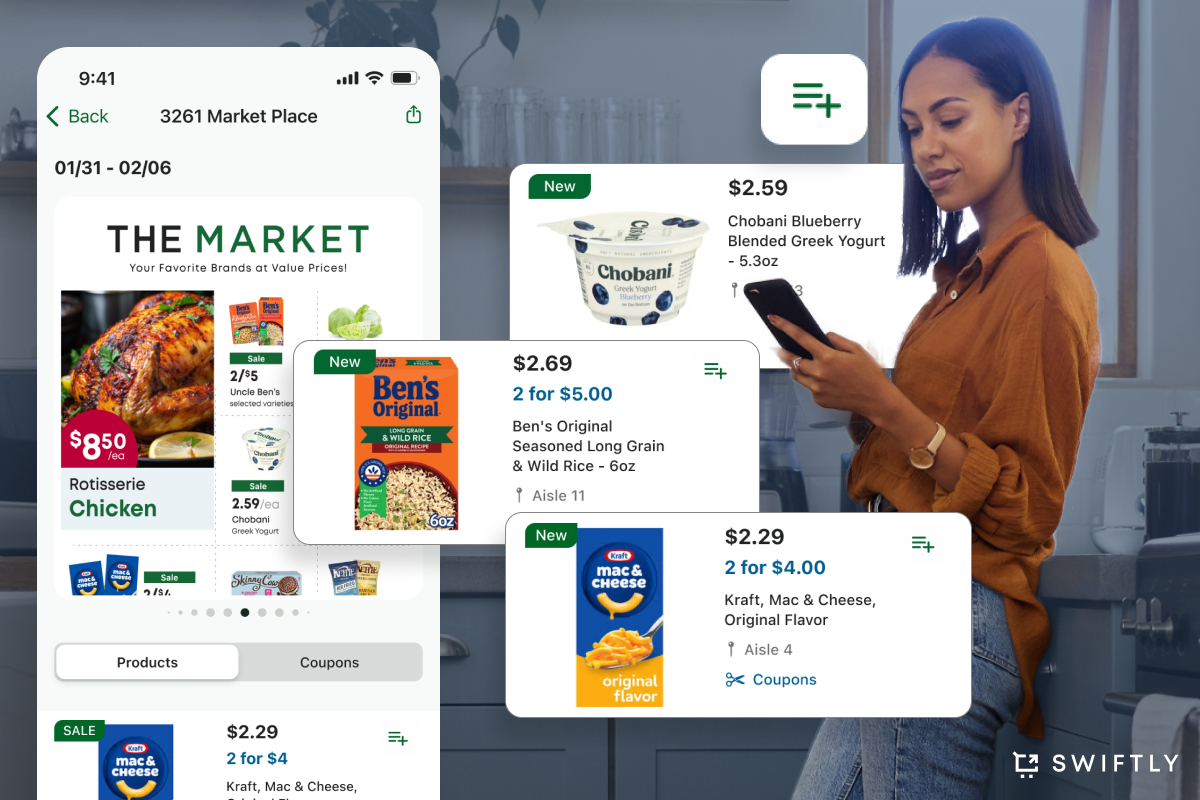
- Modern engagement tools: Digital circulars, branded apps, and personalized offers keep shoppers in the retailer’s ecosystem.
- Data ownership: Retailers gain first-party shopper insights while protecting their customer relationships.
For CPG Brands
- True scalability: One connected network can reach millions of grocery shoppers across hundreds of regional retailers.
- Transparency: Unified reporting makes it easy to compare results, attribute sales accurately, and optimize spend.
- Better targeting: Brands can tailor campaigns by region, retailer, or household behavior — connecting the right message to the right shopper.
For Shoppers
- Relevant value: Deals, challenges, and cashback offers are personalized, accessible, and instantly redeemable.
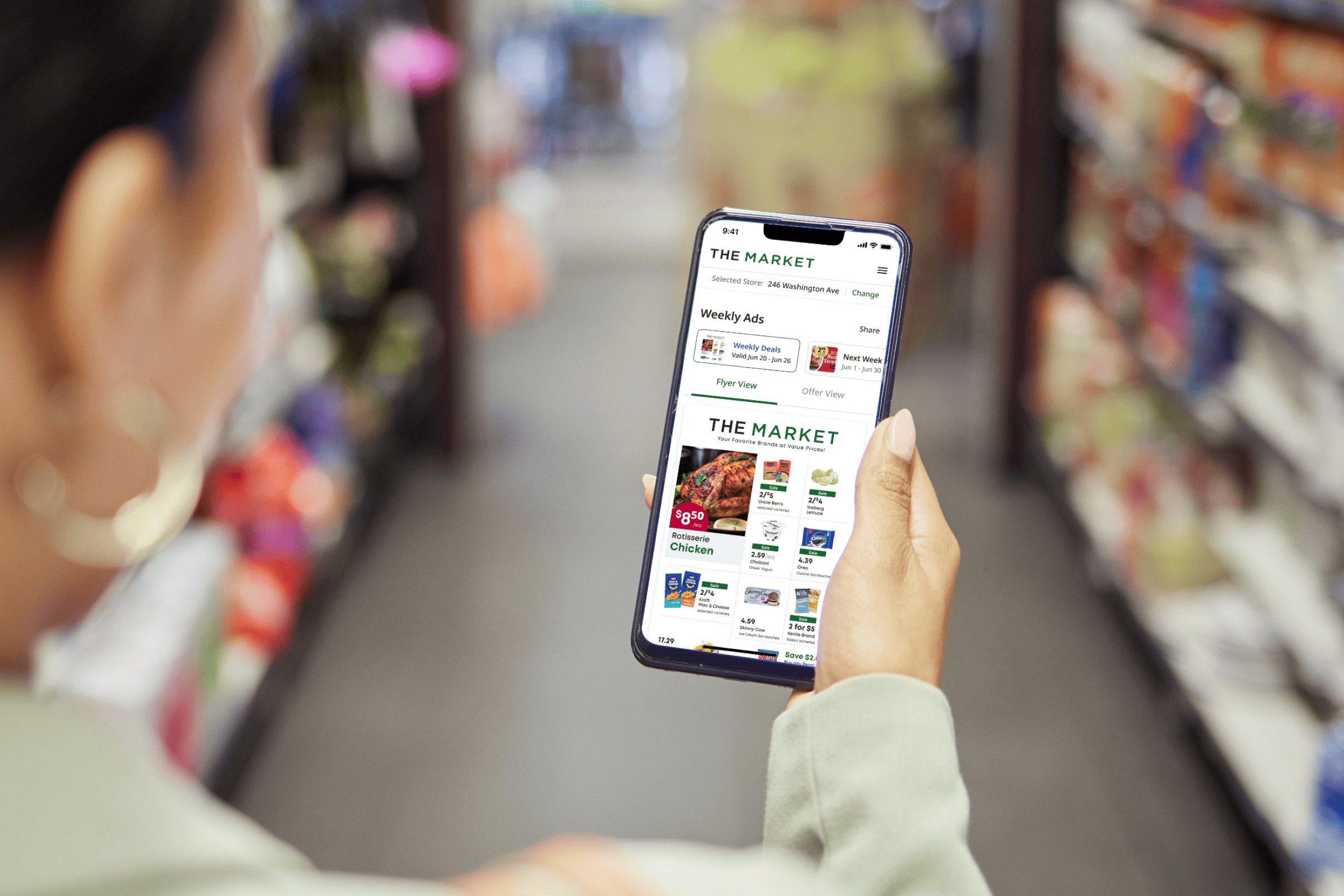
- Seamless experience: Whether browsing a weekly ad or scanning a receipt, shoppers get one connected, rewarding experience across digital and in-store touchpoints.
When networks connect, everyone wins.
How Swiftly Is Powering This Shift
Swiftly has been building toward this connected future since day one — creating a platform designed to give local and regional grocers access to the same technology that powers the world’s largest retail media networks.
Swiftly’s Retail Media Ecosystem:
- 15,000+ stores nationwide: Swiftly’s network unites independent and regional retailers under a shared infrastructure for digital engagement and retail media.
- Audience Optimizer™: Enables brands to deliver personalized digital promotions and measure iROAS with precision.
- Alcohol Cashback™: A supplier-funded, compliant cashback program that replaces outdated mail-in rebates with instant digital savings — no margin impact for retailers.
- Unified measurement: Swiftly’s closed-loop reporting connects every impression to verified sales, enabling brands to prove incremental ROI and retailers to grow their media revenue.
This approach levels the playing field — empowering every retailer, from single-store independents to regional chains, to modernize quickly and participate fully in the $160B retail media opportunity.
“At Swiftly, we’re not just connecting systems — we’re connecting scale, data, and opportunity across America’s most trusted grocers.”
The Future: A Retail Media Ecosystem That Works for Everyone
Retail media is no longer a niche or experimental channel — it’s the backbone of how retailers and brands engage shoppers. But for it to reach its full potential, scale must become inclusive.
The next frontier of retail media will be:
- Connected, not siloed: Independent retailers working together through shared platforms.
- Standardized and measurable: Common metrics, creative formats, and data frameworks that brands can trust.
- Driven by real value: Shopper-first experiences that build loyalty, not fatigue.
Swiftly is helping to lead that shift — empowering grocers to compete at national scale, giving brands transparent measurement, and ensuring shoppers receive meaningful value every step of the way.
Because the future of retail media won’t be built by a few giants. It will be powered by the many.
Learn how Swiftly is helping retailers and brands unlock the power of connected retail media. Book a demo today.